June 01, 2008

Neonatal Care in Mali from Dr. Brett


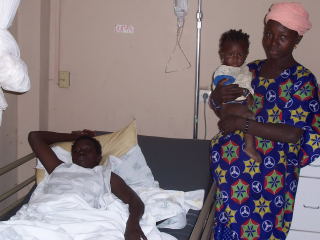
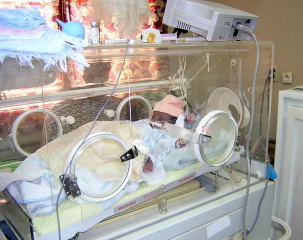
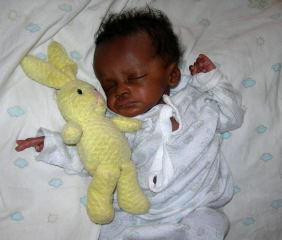
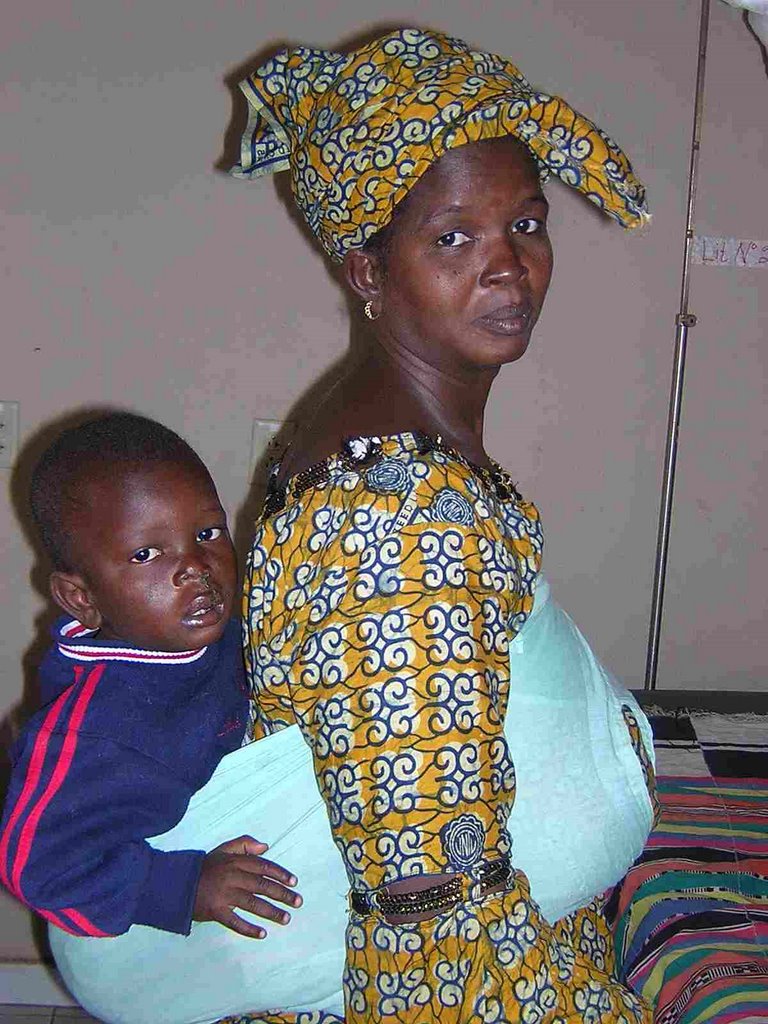
In Mali, where 1 out of every 4 kids dies before age 5, the first month of life is definitely the most critical time. A quarter of all the kids who die in the first 5 years die in the first month of life. Neonatal infections, respiratory problems, and prematurity are the main culprits. Babies get infected more often here because the pregnant women are not followed as closely as in the states. Often women come to our hospital after having been in labor with their water broken for 3 days leading to neonatal infections. Also, as in the states, but much more often here, the babies are frequently under extreme stress in the womb which leads to the passing and aspiration of their own stool (meconium) leading to extreme breathing problems. And, of course, just like all over the world, prematurity is a big problem. In WestAfrica 15.4% of babies are <2500g>


Thankfully, the cost isn't much for the families since most of our main equipment is donated. We just have to charge enough to cover our staff's salary, electricity and medicines. So we charge $2 a day for the first 2 weeks and then $1 for each day thereafter. At first I insisted on using the US NICU rate of $10,000 per day, but we eventually worked down to this price. :)

Caring for these neonates has been really enjoyable, but it can be pretty difficult as I face challenges here that I never did in the US. Besides adjusting to the obvious differences in technology and staff knowledge level, I have faced challenges such as having to swat flies from inside preemies' incubators, learning how to explain to illiterate moms how to give medicines at home (19% of Malians are literate, but those are mainly men), as well as asking myself…When a newborn has a temperature of 102 but the room is 110 is that a good thing or a bad thing? Does that mean he is doing a pretty good job keeping his body cool, or that he might die soon from a serious bacterial infection and needs emergent antibiotics? Some days our post-partum room feels like a car turned off in the summer with the windows rolled up. I tried using this analogy with our staff but since none of them have cars, they didn't really get it. :)

May 02, 2008

Latest from Jessica Shaeffer

Dear Friends,

Whenever I am in town, whether buying fruits and vegetables, looking for fabric for a new dress, or making photocopies, I hear the same thing. "You work at the Hospital for Women and Children, right? You really do a good job there. We want you to treat men too, the whole family!" J One person emphasized how our hospital takes patients seriously and cares about them. In other clinics or hospitals, he explained, patients aren't "taken into account", and doctors and nurses often take some of the patients' medicines for themselves. The honesty and kindness shown at our hospital are making a difference, and we have seen patients come from countless cities and villages (including the capital city 5 hours away) for medical help.

Although I hear regular positive feedback, there is some opposition in town too. A few weeks ago, in a mosque near the hospital, the imam (Muslim teacher) spoke before the Friday prayers telling the people to stop taking their women to our hospital because we would force them to become Christians. Those present openly disagreed with the imam, telling him that they have found that we give good and loving care at the hospital. After expressing their disagreement, they left. Many seeds are being planted through our ministry at the hospital. Pray that these seeds will grow and bear fruit.

Today I went to visit Adam, the young woman who was so ill with typhoid and perforated bowel in January and February. She had 3 surgeries during her hospital stay, but has been home for nearly 2 months now. She told me to thank everyone who prayed for her during her illness. She said that she and her husband are seriously considering following the "Jesus way".

In February I completed my last language test, and hope to finish my final language requirements in the next few months. I come home from my 10-12 hour shifts at the hospital pretty exhausted after speaking 2 foreign languages all day, especially with current daily temperatures of 100-110 degrees. In the next few months I will be taking on the role of supervisor of hospitalized nursing care. This will include training and teaching new nurses and nurses aids, writing protocols to improve organization and consistency of nursing care, problem solving, etc!

We've had some difficult cases this past month, and it has been discouraging to lose 3 women. One pregnant woman was brought in from the village because she was in a coma. We treated her for 10 days, but she showed little improvement. Early last week it became clear that she had only hours left, and the baby was in distress. The family agreed for us to do a c-section, which Dr. Dan did at the bedside. The baby was 8 weeks premature, but is growing and doing well. Another young woman, age 18, came in a week after delivering a stillborn from a village 65 kilometers away. She looked like she was still pregnant as her abdomen was ballooned up. She was quickly taken to the OR, where 1 to 2 liters of pus was removed from her abdomen, and a hysterectomy was done. She had retained placenta that had eaten through her uterus, the upper half of which was dead. I spent the following 8 hours at her bedside until she died that evening. We did everything possible we could for her medically that day, and several staff members and our chaplain spent many hours praying at her bedside. The response of the family was very typical. They received the news with stone faces saying "It was Allah's will". I know many of you also read about this young woman in Dr. Dan Nesselroade's last update…if you haven't and you want to hear more, I can forward it to you. The third woman came in with eclampsia, having seizures and blood pressure through the roof (200/120). She died on the operating table, and a few days later her premature baby also died.

Fatigue and discouragement have almost overtaken me a few times this month, but I have been frequently reminded of God's faithfulness: He never fails. He is with me. He is at work here. As I mentioned earlier, people here tell me that the name of the hospital is spreading around Mali. May Jesus' name also be spread throughout Mali. Thank you for the ways you partner with the ministry here through your prayers, your gifts, and your encouragement.

Living the Call Together,
Jessica

April 13, 2008

The Latest from Dr. Dan

Thursday a girl was brought in critically ill from a village 65 kilometers away. She had delivered there 7 days prior and the placenta had to be manually extracted afterwards by the maternity nurse, as she had protracted bleeding. She was 18 years old. It was her second pregnancy, but she had no children, as both prior babies had been dead at birth. On presentation, her abdomen was ballooned up as though she was still 9 months pregnant. Her fever was 103.5 and her heart was racing at 170 beats per minute. She was extremely anemic with a hematocrit of 14% (about one third of a tank) Everyone scrambled to find blood as we prepped the operating room. People like this are so outrageously sick that you marvel at the fortitude of their bodies. How can someone really sustain such an insult? We poured in IV fluid, antibiotics and blood and opened her abdomen to be greeted with 1-2 liters of eye-watering anaerobic pus. The best I can tell, she had an unusual problem called placenta percreta. The placenta had perforated through the uterus almost like a cancer. How she could have this and still have managed to live even a few hours after delivery without bleeding to death straightaway, I cannot explain. Now 7 days later, what remained of the placenta was dead, as well as the upper half of her uterus. We did a hysterectomy and tried to clean things up. She seemed to stabilize a little bit initially, but over the ensuing 8 hours, she spiraled steadily downwards and expired. To respond well medically to a case of this magnitude takes a Herculean effort from everyone involved. Lab, anesthesia, nurses, surgeons, everyone drops what they are doing and invests 110%. And when it is not enough, it can be rather demoralizing. 18 year old girls just aren’t supposed to die as a complication of childbirth.
When I informed the family, their response was typical. They received the news with absolute stone faces. “It is Allah’s will” they said- which is nice from the point of view of never having to worry about being accused of causing a bad outcome, but it never sits right. There is a smothering fatalism out here that has incredible numbing power. It is a philosophical anesthetic that allows people to deal with tragedy after tragedy, but on the other hand, exempts any and everyone from any personal responsibility, because, “hey, whatever happens was God’s will.” I found myself thinking, but wouldn’t God have wanted you to bring her in for treatment before 7 entire days had transpired? The tension between Divine Sovereignty and human responsibility wanders like a fault line, dissecting all of life. Both here, and everywhere, I suppose.
We rolled her body into the next building to wait for morning when the rest of the family would come to wash and bury her. I rode home wrestling for the thousandth time with the problem of evil. Things are so stark out here. One is constantly reminded that our time on this earth is but a few years.
155 babies were delivered at the hospital in the month of March. There are lots of preemies and 4 sets of twins in the house right now. It is amazing to see little two pound babies make it when you consider how little technology we have to offer.
We have had several visiting medical teams in the past 6 months. Each team leaves us stronger than we were before, as we are slowly expanding our competence and confidence. It is great fun to see the progress. 2008 looks to finish strong as we are nearing completion of a large storage building and preparing to start construction of the new maternity complex.
Thank you for your faithful prayer and support of us. It is your kindness in giving to the Great Commission Fund that allows us to stay out here.

March 02, 2008

The Latest from Bob the Builder


Columns Up

As the temperature goes up here in Mali so does the new warehouse for the hospital. The Warehouse is 71 meters long and 15 meters wide. We poured 60 columns and have brought in over 100 trucks of dirt. Granted the trucks aren’t as big as you would see in the States but it is still a substantial amount of dirt. We go from no fill on one corner to 1 meter in a few places. The place where we are building is suitable for little else but is a great sight for a warehouse. It will be close to the pediatric and maternity buildings which will help for stocking those buildings with supplies. There will be a room set aside for an x-ray machine and 5 offices to be used for administration for a few years. Then they could be transformed into any number of uses that best suit the hospital’s needs at that time. Please pray that we would find an x-ray machine to come out in this summer’s container. We are focusing on digital to get away from developing solutions because of the high heat situation here The columns were wrapped with cement paper to help hold in the humidity and were soaked down a couple times a day. This time of year when the humidity is below 10%, it is important for the strength of the cement to take this extra step.

The Malian group that we have building this building is from Koutiala and is learning much in this process. This is an important step in the building process here. Not only for the fact of teaching and expanding the local labors’ skills but it also helps with local public relations that we help employ local people and keep funds here in Koutiala. It cost no more except for time and effort. But the return from this investment will be considerable. I have been blessed to be able to work with these guys. Please pray for Momine, the mason in charge, as he is Muslim. Pray that our time together would be more than just teaching temporary skills but be of eternal value to him and those under him who don’t know Christ.


Please pray also for the project that it would continue to move forward at a good rate and that we would be able to get a roof, windows and doors on before we go on home assignment the end of April. Please pray for wisdom as I am far out of my abilities. I love what I am doing and truly enjoy seeing God at work in our daily activities.


Bed from and for Mali


After much work with a local metal fabricator and much input by the medical staff here we have a bed that is especially suited for the patient’s needs here. Everything for this bed is purchased & built here in Koutiala. “Appropriate Technology”.
-Removable canopy for mosquito net support.
-hooks for IV solution bags.
-Place to mount urine bag
-removable divider for either side of bed to protect babies from falling off, they sleep in bed with Mom. (cultural)
-standardized dimensions so all accessories are interchangeable.
-place under bed for storage of personal items.
We do have some regular medical beds for patients when needed. Please offer praise for this success and pray for future design opportunities
Thank You for being a part of this project!!!

October 26, 2007

Seeing Clearly with Dr. William Marks


After several blood transfusions—many from his own staff—and hours of surgical repair, the surgeon packed 50 meters of gauze inside Minata's abdominal area and closed her up for the night. A baby had begun to grow outside the mother’s womb, causing severe internal bleeding. The next day, hospital staff gathered in prayer and song, in hope that the bleeding would stop. The hours following would be critical to her survival.

When Minata arrived at
Koutiala Hospital for Women and Children in Mali with severe cramping and internal bleeding, surgeons used a new ultrasound machine provided by Medical Teams International. They determined that she had an ectopic pregnancy
—a baby growing outside the uterus. Dr. Dan Nesselroade, the hospital’s lead OB/GYN, and four other residents began operating immediately. Nearly a day and seven blood transfusions later, including a transfusion from Medical Teams International volunteer Dr. William Marks, Minata emerged from her ordeal. "Just a few days later I watched her walk out of the hospital," says Dr. Marks, who says these types of emergencies are quite rare and has seen only one case in his 30-year medical career. "Having access to ultrasound will allow earlier and more accurate diagnoses of ectopic pregnancies," he says.

Dr. Marks works as a radiologist in Seattle, Washington, and recently took a month off to volunteer with Medical Teams International in southern Mali. He spent his time training hospital staff to use a portable ultrasound machine the size of a laptop computer that will be used at the N'Torosso health clinic . Medical Teams International purchased the refurbished machine from
SonoSite, using funds from generous donors. "The machine is generations better than the equipment they had at the hospital," says Dr. Marks.

Thousands of Malian women and babies die of obstetric-related causes every year. “It is hard to get the statistics,” says Dr. Marks, but women who do encounter complications during their pregnancy often cannot reach care before they bleed to death. Access to an ultrasound during the third trimester will help the N’Torosso clinic staff diagnose problematic pregnancies and refer the patients to larger hospitals equipped to manage their complications. Conversely, a proper diagnosis at the clinic-level ensures that patients will not have to spend a month’s wages or more to travel to the capital for a diagnosis. "I saw one newborn with a soft spot on his head and the staff wanted to refer him to the capital, more than five hours away, because they thought he had hydrocephalus," Dr. Marks says. "I performed an ultrasound and didn’t find a hydrocephalus, but normal cranial anatomy. The ultrasound ultimately saved the family days of travel time; and in their estimation, the equivalent of three month’s wages."

Using a solar panel on the roof of the N'Torosso health clinic, staff will be able to power the portable ultrasound machine. The ultrasound machine can be powered using conventional electricity, batteries and even solar energy. An electrical engineer helped the team set up solar panels on the roof of one of the hospital’s six outlying health clinics—and the team proceeded to conduct a solar-powered ultrasound on a pregnant woman. This N’Torosso clinic is several miles from any formal power source and has never before had access to a piece of diagnostic equipment. "We explained to the people that the initial ultrasound was a pilot and that Dr. Pierre Kamate, whom I spent time training, would be back to the clinic with the equipment soon," says Dr. Marks.

In addition to performing more than 140 ultrasounds on patients and providing training for the hospital staff on the use of the machine itself, Dr. Marks also held 10 lectures for the physicians and surgical residents. He covered ultrasound topics ranging from basic physics and obstetrics to fetal malformations, to breast, neck and hernia diagnosis, and liver, gallbladder and renal scanning. "While a number of individuals received help, the most important part was the training," says Dr. Marks. "My experience was just great…and it is very cool to see the impact we are having firsthand."

August 23, 2007

Dr. Wong's Experience at the Koutiala Hospital

19 August 2007

Hello-- I am an OBGYN coming to the end now of my month in Koutiala, working at the CPAM hospital, and I want to express my thanks and gratitude to all who have made my working here possible. This has been a truly remarkable experience for me and I will treasure the memories. At the hospital, I want in particular to thank Gail, Betsy and Carey for their help and support. Language was a problem and I appreciate those who put up with my feeble attempts to learn some French. I promise to study French before returning in the future. I also want to thank the CMA mission staff, Bob, Becky, Barry, Terry and others for their hospitality during my visit.

I was impressed by the dedication and faith of the local staff at the hospital. I was interested to learn how many things could be recycled and used over and over again in the hospital, which only emphasizes how wasteful we are in the US. I am pleased with whatever I have been able to contribute to the health and welfare of the local people in the short time I have been here.

I pray that the hospital and mission work in Mali will continue to be blessed in the future.

Richard Wong, MD
Portland, Oregon

August 12, 2007

People along the Path


August 4, 2007

by Carey Schlieker

I have been reflecting this month on how many people have crossed my path lately. They are often unexpected blessings that just "arrived" when I least expect them. They all have an impact on my life in various ways and I'm so grateful!

I have been having a great time this past month spending time with the Malian nurses I work with at the hospital! They are dear people and I have grown to love them all. Betsy and I had a movie night in July. We made them dinner and then watched "Ever After". The nurses were more entertaining than the movie as they openly cheer the heroes and heroines and then boo the villains! The night was to simply to enjoy time together without the stress of work. They are dear sisters in Christ and I will always be grateful for their impact on my life.

Thanks to our great friends in Shelby Ohio, another 40-foot container of medical supplies arrived this past month as well. As we were unpacking supplies and machines, my Malian friend Bintou said, "Kadia, doesn't this remind you of before the hospital opened?" I was thinking the exact same thing! Before we opened the hospital we sorted hundreds of boxes of supplies. Remembering how overwhelming that task was helped us all keep perspective this time around as we unloaded boxes and thought, "this is nothing compared to the last time."

We had a "changing of the guard" a week ago as Dr. Petty handed over the medical responsibility to Dr. Wong. Dr. Wong, also an OB/GYN physician, will be staying until the end of August, then Dan will be returning. Dr. Wong got initiated in his first few days by 3 c-sections in 3 days. He is doing great and a joy to work with. We are so thankful for him!

We have 7 new nurse interns at the hospital now. Needless to say, we are busy training, training, and more training! Some are nurses and some are nurses' aids and have various levels of experience so it's always a challenge to determine what level each is at and then teaching them appropriately. We are thankful for missionary nurse, Brenda Michelson, who came to help us for 7 weeks. She is a blessing and also has become a good friend. A nurses' aid from France, Wendy, is also here helping training nurses' aids. She was here last October and decided to come back! We can't thank these ladies enough for being willing to share their expertise with our staff.

God bless you all for your interest and support of the work here in Mali at the Koutiala Hospital for Women and Children. Speaking for the team as well as myself, "We couldn't do it without you!"
Visits to the Village

About 20 miles from Koutiala, on a good dirt road, is the village of Baramba. It hosts one of six clinics in Mali that have been started by C&MA missionary nurses several decades ago. All of the clinics are now directed and staffed by Malians. Each clinic has an ambulance available in case of an emergency that cannot be treated on site. As I arrived in Baramba with some visitors, the local pastor was just beginning to give an evangelistic message to the patients who were waiting to be seen. After a tour of the very clean clinic and maternity, we visited the Baramba Christian Girls School. Seventy or so young women, ages 12 and older, live on the school campus from November through April. There is a literacy class for those who arrive at school not knowing how to read or write. The girls take classes ranging from Bible to health to sewing and weaving. They also organize their meals and take turns cooking. We had a wonderful visit with the staff of the clinic and the school and were grateful for a glimpse of the impact they are having in their community and on young women.


Anesthesia and More Language Learning

My friend and colleague Carey has been patiently teaching my anesthesia this past month. I still have a lot to learn, but have some of the basics down of how we do things here (we keep things as simple as possible!). This past week our visiting doctor from the U.S. said he feels like he's at the tower of Babel when he hears French and Bambara being intermixed and spoken around him in the OR/hospital. I'm grateful I have patient teachers who continue to help me in my language study so that I can make sense of the languages spoken here and so that I will be able to communicate well, both as I teach in the hospital and share the message of hope in Jesus.


Praise God for several new nurses and nurses aids at the hospital. Pray for them as they go through training in the coming months. Pray for me as I continue to learn anesthesia.

Thanks for your prayers and encouragement which mean so much to me!


Jessica Schaeffer

August 06, 2007

A note from Dr. Petty- May-July 2007

A note from Dr. Petty- May-July 2007

This, my second visit to Hopital Femmes et Enfants, was at the time of the celebration of the hospital’s one year anniversary and over 1000 deliveries later.

It is a blessing that each weekday, the day starts with one half hour of worship and devotions both in French and the local Bambara language. Words like Yesu (Jesus), Aleluya (Allelujah), Ala (God), Matigi (Lord), and Amiina (Amen) fill the songs. A prayer time is held for personal and corporate needs after a devotional. At the end of the worship, everyone shakes everyone else’s hand and says, “May the Lord bless you” in any language. It is a wonderful way to reestablish relationships for that day and start the day in a positive frame of mind.

My experience was excellent. Some knowledge of French is most helpful even though it might have an American accent. The staff is most supportive.

Patient problems cover the gamut. The hospital has a reputation for excellence. This is well deserved because everyone works above and beyond in order to give excellent care. The hospital is a sought after place of employment. So those hired have excellent skills or excellent learning potential if they are coming on to be trained. Each is committed and compassionate.

Because obstetrics is a day and night activity, the staff is equipped to handle emergencies at all times. The post partum care for premature babies is exceptionally outstanding. After one premature baby was helped through many difficulties for one month, finally she had a problem causing her death. Her mother and grandmother had been at the bedside, watching the excellent 24 hour care. When they left, the grandmother said, “I want to follow Jesus.” Jesus said, “…let your light shine before men, that they may see your good deeds and praise your Father in heaven.” Mt. 5:16. This is being done 24 hours a day at the Hopital Femmes et Enfants in Koutiala.

I have been blessed to be a part of this effort.

William M. Petty, M.D.


June 11, 2007


June 11, 2007

Happy Anniversary Koutiala Hospital for Women and Children!


by Betsy Bohuslavsky

On May 22, 2007 the hospital celebrated it's First Anniversary! One year ago we opened our doors after many days on our knees for the electricity situation and other needs. It's amazing to look back and see the Lord's faithfulness and sovereign hand on the whole situation. We praise Him for forming the hospital, fulfilling a vision given many years ago, and giving us numerous opportunities to share about Jesus. Every weekday 30-100 people here a gospel message given by our Chaplains Enoch Coulibaly or Simeon Dembele. In the last year approximately 1,051 women delivered at the hospital, 69 of which were cesarean sections, and 89 other surgeries performed. Indeed we have seen the Lord work in many peoples lives including our own as we are humbled to give each day to Him and seek Him above all things. One of the joys He has given us this past year is to see some of our little preemie babies have the opportunity to live through the special care we could provide for them. In the picture is one of the preemie's, baby "Christophe", whose mother brought him in recently for his immunizations. He's grown so much! Of course there have been challenging and sad moments too, but the Lord's presence carries us through those times and gives us strength and joy to continue working. On our anniversary day all the hospital staff gathered together to enjoy some treats, sing "Happy Birthday" to the hospital, pray together, and sing in praise to the Lord for all he has done.

Prayer Requests for Hospital:
  • Please pray for our staffing needs. We need to hire more nurse's aids and start training staff to work in the OR. Pray the Lord would give wisdom to our administration as they make decisions and interview applicants.
  • Pray for Dr. Bill Petty who is filling in for Dan the first two months of the Nesselroade family's three month home assignment to be followed by Dr. Wong for one month. We are so thankful to have him here helping out (and to have Dr. Wong coming). Pray that the Lord give them the strength to meet all the demands and emergencies that can happen at the hospital. Pray for the Nesselroade family to have an encouraging and uplifting time in the States.
Prayer Requests for Mali in general:
  • Currently we have a team from Christ Community in Omaha (my home church!) here to do some construction and distributing packaged meals in another village. Thank the Lord for their help and support and pray for their time to be and encouraging and fruitful.
  • Rain! We have seen very little rain for what's expected by this time of year. Many of the locals are getting concerned for this year's crop since the rain is very late in starting and some are still waiting to begin planting until it rains more. Since life is so substantial here this effects the livelihood of many.
  • Believers in the village Finkolo- Last month I had the pleasure of visiting missionaries Randy and Marsha Barnwell in Niena. On Sunday we drove about an hours ways out in the bush to a village called Finkolo. Recently several children became believers and every Sunday Randy and/or a pastor from Niena drive out to Finkolo to have a Sunday worship service with the children and one old man who is also a believer. They meet in a old building and recently bought chairs and benches so the Barnwells wouldn't need to keep bringing them. The children and the old man were so excited to worship the Lord together with us. Please pray the Lord would provide a pastor for this village to help this band of believers grow in their faith and that more would have a hunger to know Jesus. Below is a picture of the church members.


Check out the website- (updated recently)

June 06, 2007

Life in the lab with Missionary Ed Bonvillian


The First 3 Months

by Ed Bonvillian

We arrived three months ago in Mali so that we could enjoy the
full on hot season. It is amazing how cool 90ºF feels in your
bedroom at night. Soon after we arrived friends from our
church in Springfield showed up. For two weeks they did work
around town on missionary homes and some small things at the
hospital. Lots of laughs, rearranging popular songs to fit in the
Malian culture and 70s cartoon show quotes. After tearful good
byes it was off to work at the hospital and the girls focusing on
finishing up school while language studies were rescheduled for
our return in September.

At the hospital I met David, a Malian in his early twenties. He
is the first guy that I am and will continue to train in the lab. He
has a hunger for knowledge and is eager to learn. The first week
we spent getting to know each other. I used music as an ice
breaker. I told him that music in the lab is a must. The first
three hours in the morning was Malian music. After I had a
pounding headache from high pitched whining with no melody
I quickly switched to Stevie Wonder and Marvin Gaye. I could
tell by the constant clicking noise made by David that he was
getting a headache. Clearly this was another case of racial profiling
that was not a good thing. Common ground was soon
found with Bob Marley. You can never go wrong with Bob.
We were quickly “stirring it up” in the lab with a routine of
going over basic tests in the morning and reading basic biology
like blood components from Wikipedia French in the afternoons.
David’s life outside the hospital is loaded with responsibilities.
He supports his three younger sisters that live with him
and two brothers that are studying in Bamako. He is saving up
for the dowry that is needed for the woman that he wants to
marry. I smile thinking about the interesting cultural conversations
that we have had over the past month and a half. It has
been good for me to see things through his eyes and I think he
has appreciated my points of view. As I left the lab on Friday I
realize that he is a gift from God and I am happy that we are
living the call together.

We thank you for your support and prayers for us and the hospital staff. We have used our work special fund to buy books and a refrigerator for the lab. While back in the States this summer I will be looking at other necessary lab equipment that we need to purchase. Please continue to support us through our work fund and the Great Commission fund as you feel God leading you.

In His hands and see you state side,
Ed, Andrea, Madeleine, Lily, and Chloe

April 17, 2007

Building Update from Bob Braafhart:

  • Started construction on one of the porches of the existing maternity building to enclose an area to house about 10 extra beds. With the present rate of over 130 deliveries a month(doesn't include sick patients), only 13 beds in the maternity ward has proven to be not enough. There should be beds in there by the end of the month. Please pray for a timely completion to this project.
  • We are currently working through the plans for the new women's medical building. It will cover the square meters about the size of a football field. We are working through the floor plan to get it down to the budgeted size and to be sure that what gets built is useful for the needs in this culture. Please pray for wisdom and unity as we work our way through these plans.
  • We are in great need to solve a rain problem before the rainy season starts in a little over a month. After the Pediatric building was built and the first rain came we found that the building wasn't adequitly protected. The rain came in with such force that it flooded rooms through closed windows and large entry door opening. We would like to extend the roof off the east side to help with the rain, take some of the direct sun off the patients' room and supply a place to park staff vehicles out of the scorching sun. Please pray for the funds to do this. It is estimated to cost $8,000
Triplets

This last month brought the arrival of the first set of triplets delivered at the Koutiala Women & Childrens Hospital. They were between appox 3, 4 and 5 pounds. Within an hour after their arrival twins were born bringing the total births for that day to 8. Please pray for Dr. Dan Nesselroade and the staff as they are on call 24/7 with little to no relief in sight.
Women and children are alive today that otherwise would not be because of the ministry here. Hundreds of patients have heard the message of the freedom available with faith in Jesus Christ with a few making a descions to follow. Seeing and hearing this makes our cups overflow. There is bound to be struggles and obstacles where Satan's territory is being assalted. How we deal with those also testifies to our lives and faith in Christ.
Thank You for being a part of God's work here in Koutiala!


March 26, 2007

March update from Dan Nesselroade

March 23, 2006

I don’t believe it has rained here since October, and hot season came in with a vengeance this week. The one thing falling from the sky out here is babies. We are averaging nearly 5 a day at the hospital. If only they came in one at a time, weekdays between 8 and 5. :)
We have seen an enormous amount of abnormal deliveries recently. Breeches, arm presentations, face presentations, prolapsed umbilical cords, ecclampsia, placental abruptions, cervical lacerations, placenta accreta, molar pregnancies, ectopic pregnancies, abdominal pregnancy, shoulder dystocias, transverse lies, twins, fetal distress, forceps galore and on and on. Our case load from the past few weeks reads like the table of contents for a textbook of obstetric emergencies. Through it all we continue to see amazing things, most notably God’s kindness intervening to save our collective bacon, routinely. There is nothing quite so humbling as watching God leap into the middle of a disaster in progress, and provide you with a good outcome, directly on the heels of your missed diagnosis. (ah…..your Great Commission dollars hard at work) It leaves you kind of bewildered. Who is like our God?
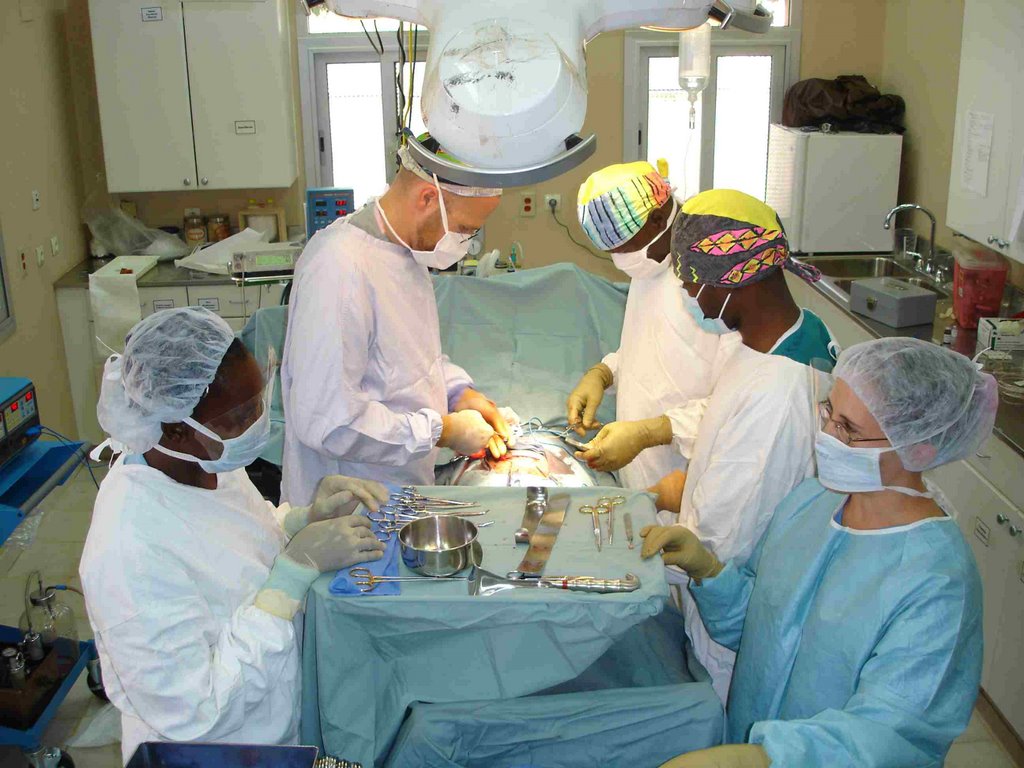
Marcy’s parents visited us for the entire month of January. It was so fun to operate together again with her father. We laughed and laughed the whole time. I marvel at God’s kindness to us.

Ami

There is a large, painted sign on the wall in our recovery room. Its message is written in Bambara, the dominant language here. It reads: HEALTH IS FOUND IN JESUS. Under that sign, for weeks on end, lay a pathetically sick 17 year old new mother, literally ravaged by typhoid fever. We expected her to die so many times that I quit counting. Her premature baby lay in a bassinet next to her bed. In spite of its tiny birth weight, it was thriving and growing, receiving infant formula dripped in through a tube in its nose every couple of hours by nurse after nurse, shift after shift, for weeks on end. Its mother, however, was its antithesis. I have never seen anyone run continuous fevers above 103 degrees like that, literally day after day for weeks solid, without succumbing. On occasion, she would push to 104 and 105 degrees. Two times she became so overwhelmingly infected that her blood lost its ability to clot. She would vomit blood, bleed uncontrollably from her nose and pass large amounts of fresh blood from her anus, at times, simultaneously. She received 13 transfusions and probably consumed one third of the entire hospital’s supply of potent intravenous antibiotics during her 7 week hospitalization. She prayed to receive Jesus early in the illness, in a window of relative lucidity. It became quite clear that while yes, she was overtly physically ill, she was as well exceedingly spiritually ill. Now in America it is medically quite vogue to talk about “holistic care”, caring simultaneously for the body, mind and spirit of the patient. But, as best I know, none of our Malienne nurses have ever attended a workshop on any such thing. Neither would they know to define the term, as such. But what I saw them provide was the most dramatic example of compassionate holistic care that I have ever seen, or ever really imagined. God moved on a couple of their hearts and they began to really pray for this girl. They infected the others. It became a common sight to find the nurses gathered around her bed singing hymns at the change of shift. I would come in, in the middle of the night, and find a nurse at her bedside reading scriptures to her. At times they fought for her. Real spiritual combat. Their worldview leaves them perfectly unencumbered to be able to do such things. No need to follow formulas, they simply know the power of Jesus’ blood over evil spirits. Nothing theoretical whatsoever. “Love thy neighbor” means that you understand and use this authority when it is needed. Yet again, I found myself thinking- who is the missionary here? And who is supposed to be teaching medicine to whom?

Last week she went home smiling and free and healed. Do I think that the antibiotics and the blood helped her? Of course I do. But they aren’t what set her free. HEALTH IS FOUND IN JESUS.

A Painful Loss

Yesterday we operated on a girl with an abdominal pregnancy. It is a type of ectopic pregnancy, so it is outside the uterus, but the pregnancy continues to develop, usually implanted on the rectum or the intestines. They are extremely rare, and I had never seen one. The baby was alive and near the fifth month of gestation, so that the gestational sac was about the size of a volley ball and filling the pelvis, behind the uterus. Unfortunately, the placenta had begun to separate and she began to bleed catastrophically into her abdomen. By the time we got to the OR, her pulse was already 160 and she was hypotensive and had bled several units of blood into her belly. You cant take the placenta out because you cant get the bleeding stopped if you do. We couldn’t get the bleeding stopped even leaving it in place. She received a total of 9 units of blood. (we have no blood bank, so this was just 9 willing people who gave a unit of whole blood on the spot) We worked for 5 hours and ended up packing her pelvis as tightly as possible with compresses and closing her abdomen, hoping she would clot off and we could go back in 36 hours or so and take the packs out. I’ve just never seen anything like it. We transferred her to the recovery room and she was laying in the same bed, under the same sign. HEALTH IS FOUND IN JESUS. Last night around 10:30 she died. She was 20 years old. I cried and cried. Perhaps the most discouraging thing about prayer is when God doesn’t do what we want him to do. I imagine he feels the same way about us.

Prayer

Please continue to pray for us. Pray for the missionaries and the Malienne staff as well. We are all tired and kind of beat up. The work increases faster than we can respond to it, so we chase along behind and get discouraged. Pray for the patients here. Pray that God would open hearts and minds to his grace and forgiveness. HEALTH IS FOUND IN JESUS.


May the peace of God keep you.

Dan, Marcy, Emma, Ellie and Maggie

February 19, 2007

A Little Look At Life in Mali: Going to Church

by Jessica Schaeffer

"I consider everything a loss because of the surpassing worth of knowing Christ Jesus my Lord." Philippians 3:8a


I just got home from church, where the pastor spoke on the verse above. It is still very difficult to understand the sermon in Bambara, but I was grateful for this reminder from Paul to keep pressing on to know Christ more and to help others know Him too. As usual, my church was packed out for the almost 2 and a half hour service. There was a little "traffic jam" of bikes, motos and people trying to get out of the church courtyard after the service. To my best estimate, there are nearly 500 people (including children) who come each Sunday. Small children sit on the lap of an older sibling or mother, and bigger children sit quietly on mats on the floor at the front of the church for the first half of the service, and then they divide into 3 or 4 classes for Sunday School. Two ushers help find space to squeeze another person into the church…often people who sit on the end of the bench are half on the bench and half off. The worship is lively with a few people playing drums and an instrument with a large gourd and beads. Most people have the songs memorized, but a few people (including the worship leaders and myself!) bring songbooks. Although most songs we sing seem to be tunes and words that originate in Africa, there are a few with tunes taken from English hymns or choruses. The song we sing while the offering is taken every Sunday is to the tune of "Auld Lang Syne". Women sit on one side of the church, men on the other side. After the service is over, people exit pretty quickly and to their visiting outside the church courtyard on the dusty road. I am the only white person who attends the church since my missionary colleagues attend the other 3 Alliance churches in Koutiala.


Philippians 3:8a in Bambara: "Tinyé la, ne bé fén bée jate bóné ye nin nafaba kosón, Yesu Krisita ne Matigi dónniya kóni."


February 18, 2007

Our Friend Ami

by Betsy Bohuslavsky

Hello again from Koutiala where the work goes on night and day at the hospital for Women and Children. Thankfully we serve a God who never sleeps! He has shown His faithfulness and mercy amongst our patients in special ways this past month. One patient, Ami, delivered her baby at our hospital late January, then became ill just after with high fevers and dangerously low blood counts. We began treating her with antibiotics and blood transfusions but the severity of her illness didn't improve much. One evening she prayed with some staff and put her faith in Jesus. The next day something happened we don't see or talk much about in the U.S. She began acting and talking weird and the Malians, including our pastor, quickly recognized that she was suffering from demon possession. It's a very "spirit" world here in Africa and the Christians don't doubt it's reality and really wield the weapon of prayer and praise in the all-powerful one our Savior and Lord, Jesus. It was a beautiful thing to see pastor Enoch sitting at her bedside all day praying over her and one of our nurses Germaine hardly left her bedside that night singing praise songs over her. Whenever the demon spoke through Ami they told it to leave in Jesus name. I know this story sounds so unusual and hard to imagine for us "Westerners." I sensed my own inadequacies in dealing with such an obvious spiritual battle. I was thankful the Lord put me with a team of Malians and other missionaries to learn from in this situation. As for Ami, she seemed to be herself after a day of praying, but still very physically ill. Last Saturday morning her abdomen and assessment showed alarming signs of needing surgery. We took her to the "bloc" and after opening her abdomen we were relieved she didn't need any bowel resection but parts of her bowel were completely inflamed and hot. That, along with all her other symptoms confirmed in Dan's mind from what he learned in tropical medicine training that she definitely had Typhoid Fever. We continued with the treatment for the disease and praying for her healing. This past week she's required constant nursing care and hasn't been able to eat anything except a little "clears." We've given her a total of about 11 blood transfusions the past 3 weeks and her blood counts seem to finally be stabilizing. Probably the most encouraging sign the last couple days has been that her temperature has returned to normal a few times. Many times despite giving Tylenol her fever would reach 105 degrees. Even though we are seeing encouraging signs we ask you to pray with us for her healing and strength to return.

A team just arrived this weekend to come work at the hospital and relieve us medical missionaries so we can gather as a whole missionary team to have our annual Prayer Conference. We leave Wed this week and I'm looking forward to the time learning from God's word together and praying for Mali. Pray for the team as they work at the hospital and for our Prayer Conference to be a renewing time for all the missionaries.

We have three new nurses, one who is a new employee and the other two who are nursing students doing clinicals with us. We have a program designed for how we want their time to look with us. The hard part is always having enough qualified experienced nurses around to oversee them. Pray for us as we manage a lot of new nurses and try to teach them things. Many times I get stuck with my few Bambara words and don't know how to teach them clearly.

Our first two fistula repair patients are doing o.k. They still have their catheters in. One came back after her catheter got blocked at home and she was leaking urine again. The problem seems to be temporarily fixed with a new catheter but we are unsure how well both the ladies will heal completely. Pray for wisdom whether more surgery is needed in the future and healing.

Pray for our care of preemie and sick babies and their mothers. These little ones need lots of TLC and Gail has been very busy taking care of newborns lately and managing their care.

Thank you for your partnership and prayers!

January 26, 2007

First Fistula Repair Surgery

by Betsy Bohuslavsky

During my first few months in Mali, I read the book The Hospital By The River by Catherine Hamlin. The book is about a hospital in Ethiopia called the Addis Ababa Fistula Hospital which does surgery helping women whom from long, obstructed labor suffer complicated fistulas that cause them to constantly leak urine or stool. I was so inspired by the book and the life changing work the Lord has done through them for women in Ethiopia. I wondered if that was something women in Mali suffer from and if our hospital here would one day be helping ladies with those types of fistulas.

This week Dan performed his first fistula repair with success so far at post-op day 2. The patient is a young girl, about 18 years old. We actually had the blessing of doing many surgeries this week with the help of a visiting medical team from Omaha, NE and Dan's father-in-law, Dr. Dave Billings. This particular surgery though was something new for all of us (it's not common in the US). We are praying for healing and a successful recovery for this young girl. She has to stay on bedrest for two weeks and the nurses have to watch her urinary catheter closely so that it doesn't get blocked. Please pray with us for her healing and for the Lord to speak to her and her family caregivers during the next few weeks in the hospital.

January 20, 2007

Our Little Fulani Baby

(His incubator days)

(Ready to go home)


An answer to prayer is named “Baby Christophe”. He was born about 6 weeks premature at the hospital on November 18th. He required antibiotics, oxygen, an incubator, tube feedings, and a lot of TLC for 2 months. His weight at one time dropped to just over 1000 grams (2.5 pounds). Today he is 2,000 grams, drinking from the bottle, and planning to go home with his mom in the next few days! Because normally babies are not named until they have been home for 1 week, our Pediatric Nurse Practitioner, Gail Warner, named him Christophe because she was praying that his healing would be a Christmas present. Well, it came as a New Year’s gift. But we praise God and give Him the glory for this miracle! We also praise God that while this Fulani mother was with us at the hospital, she heard clear presentations of the Gospel. (The Fulani are a people group who care for cattle. They also have very limited access to the Gospel.) She understands that the credit for healing her baby belongs to God.


We praise Him for this miracle!

December 07, 2006

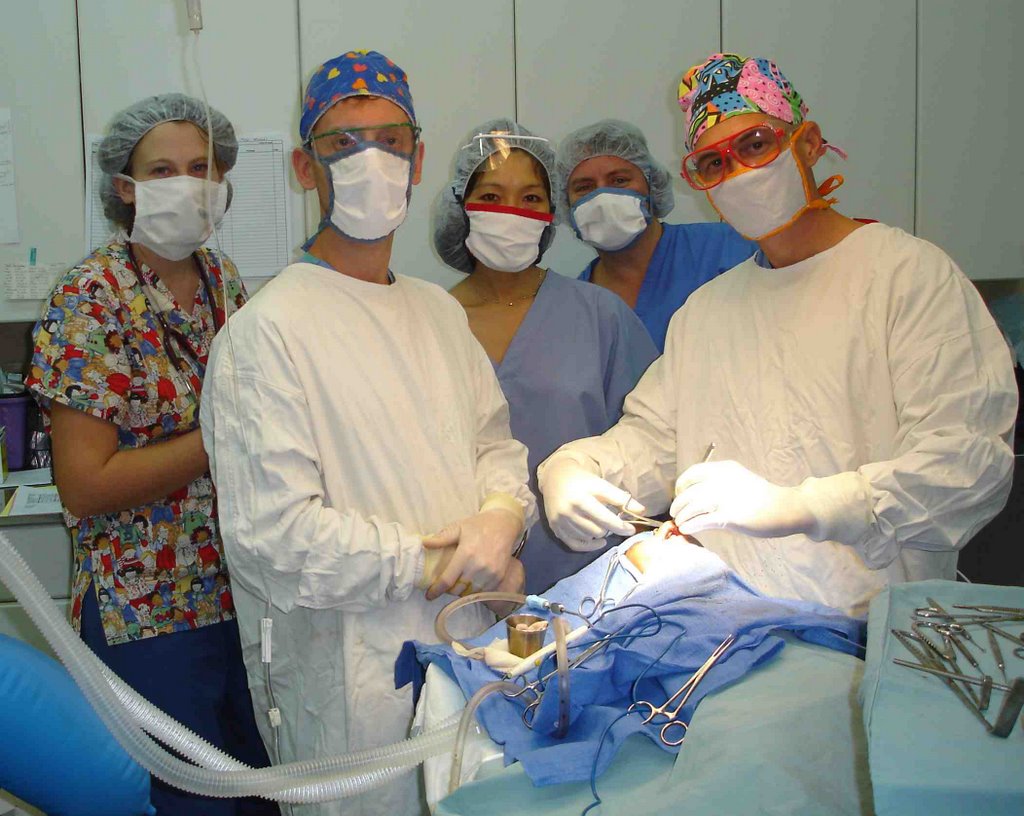
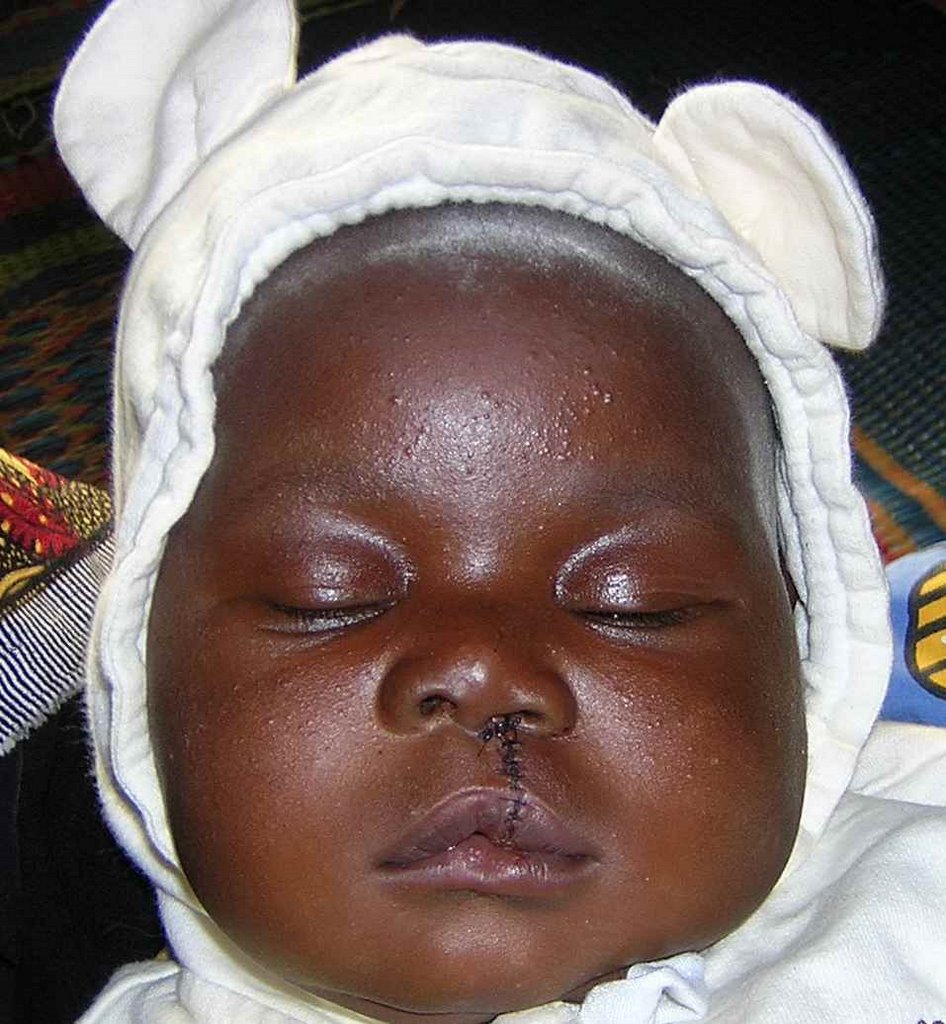
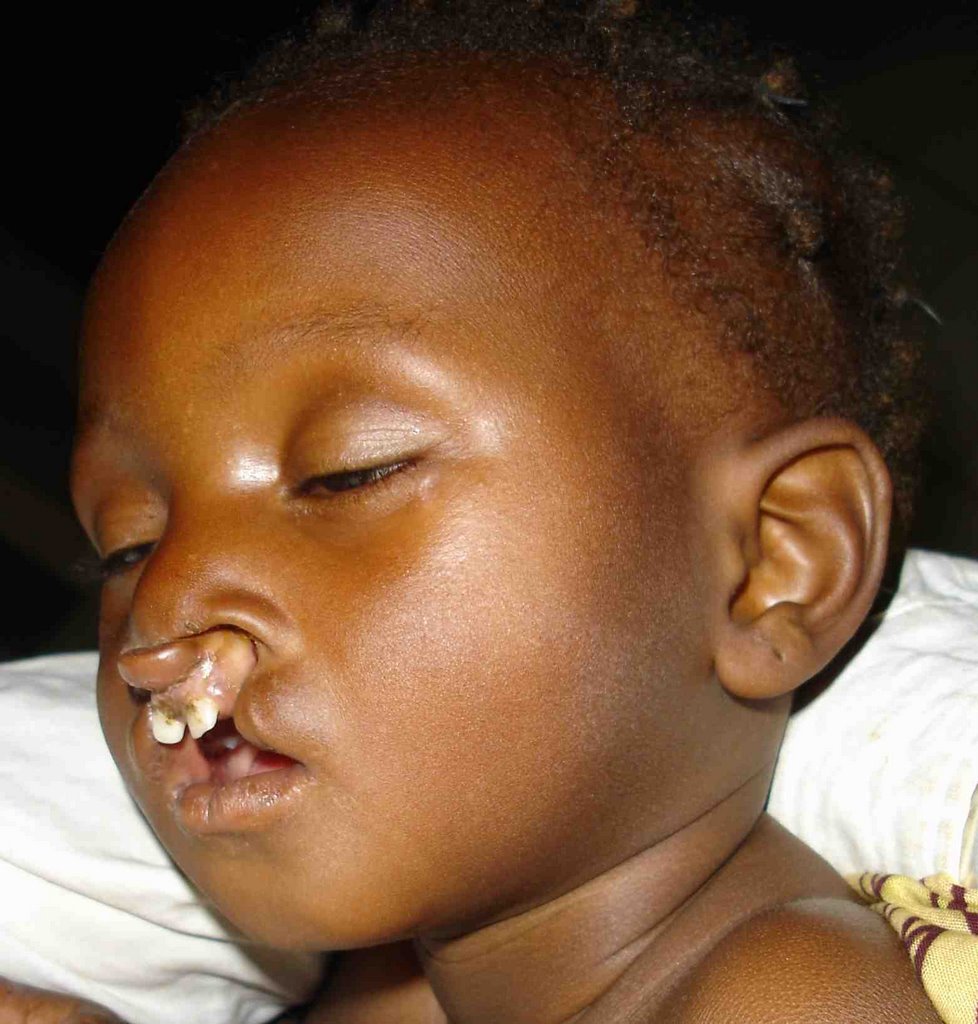
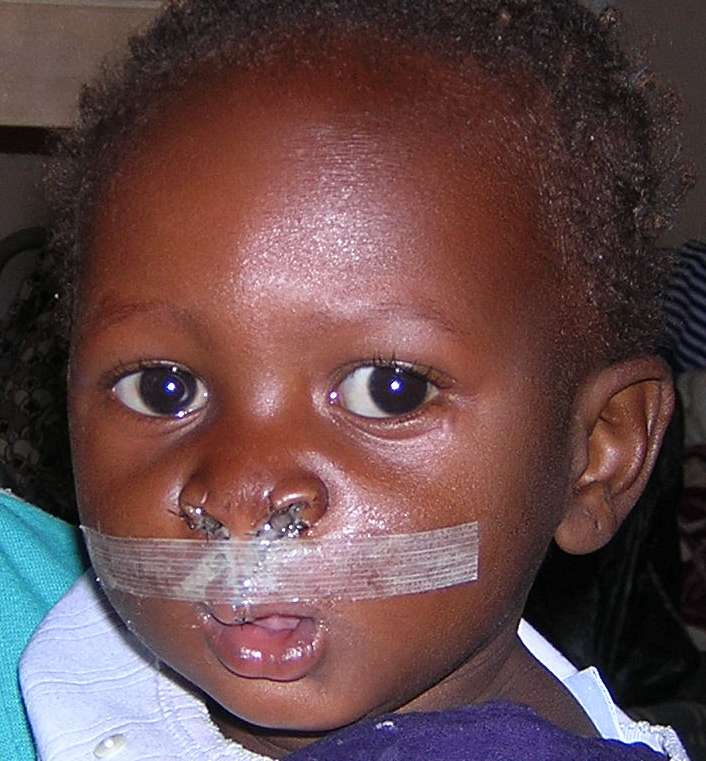
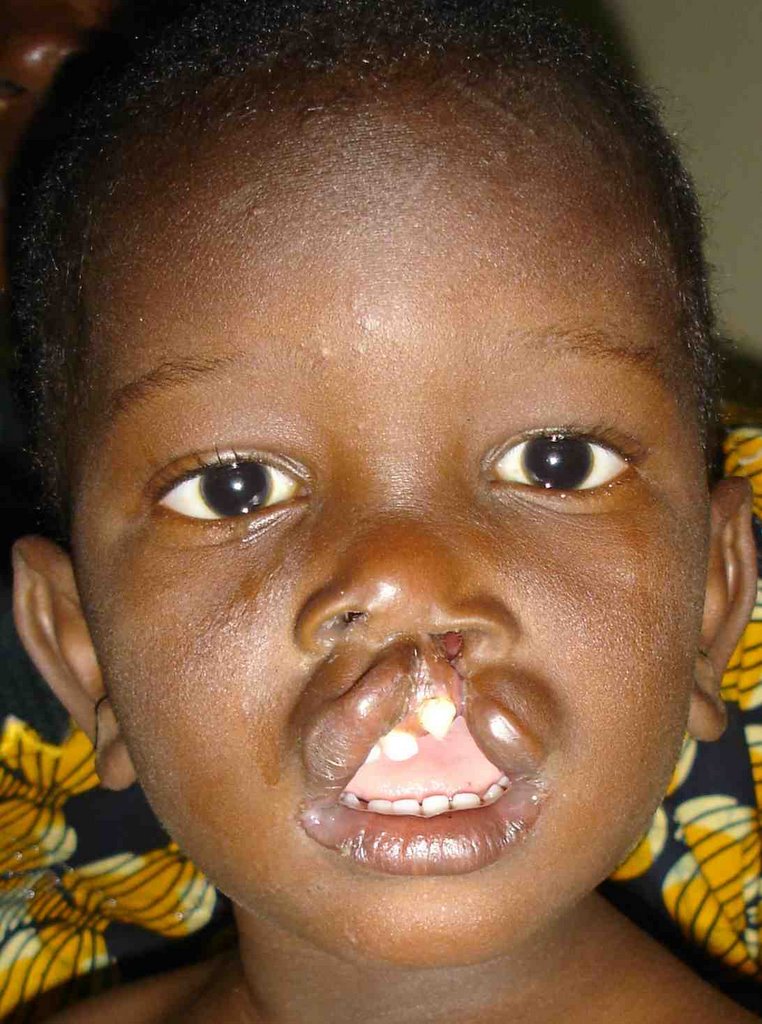
Visiting Surgeon Does Cleft Repairs


We had the pleasure of hosting Drs. Tim and Hyuen Bartholomew, missionaries headed to work at the Hope Clinic in Guinea, West Africa. Tim performed three cleft repairs on
three children whose families asked missionaries about treatment possibilities several months ago. The results look remarkable and the chance to do something special for these children and their families was an opportunity from God. May He receive the glory!

Missionary Jeff Amstutz also scrubbed in for a change from his administrative duties. All three kids were brought to the OR, placed with IVs, put under anesthesia and intubated and sedated throughout the entire procedure which ran from 2-4 hrs total with recovery time. The hospital hopes to host Tim again in a year or so as we expect more cases to be
coming asking about treatment.


December 06, 2006

Update from Dan Nesselroade

December 6th, 2006

This is the coldest time of year in Mali. The temperature drops down into the high 60’s at night and it seems funny but we are all wearing jackets and sweatshirts in the morning. I am sitting here in our living room with a cup of coffee and if I didn’t look out the window, I could imagine it was autumn and I was back in Ohio. The rains stopped here about two months ago and we won’t be expecting anymore until next June. It is dry and dusty, but COOL and for that we are very thankful. I hope this letter finds you all in peace.

The hospital is beginning to take on a life of its own. We are doing about 100 deliveries a month now and seeing 50-80 patients in consultation each day. We are doing about 20 surgical cases a month as well. God has blessed us with a wonderful team of Malian and expatriate doctors and nurses. It has been a great joy to watch how we are walking forward together, taking small steps each month, learning and improving our efficiency and our level of care. I am so proud of our little team.

Medical practice here is challenging. There is an enormous amount of infectious disease. Fortunately, most Malian women are as tough as nails. Their resilience in the face of malaria, often profound anemia, and frequent poor nutrition is shocking. Their emotional fortitude in the face of all too frequent infant death is equally amazing.

Last Tuesday a lady presented for consultation being buoyed up by a family member under each arm. They were from an outlying village. She had delivered a premature infant there, 6 days earlier. The infant died at birth, but the placenta never came out. Now, 6 days later, she was massively infected, febrile to 103 F, her pulse was 150 beats/minute, and still bleeding with a hematocrit of 11% ( that is about one fourth of the normal amount of blood cells for an adult) I really couldn’t believe she was even alive. While we were scrambling to get blood for her and to get the operating room ready, a second lady came in pouring blood in active labor with a baby already dead that was positioned sideways in the uterus. Her placenta had prematurely begun to separate from the uterine wall and was causing the hemorrhage, but the baby was locked in her pelvis, unable to descend because of its transverse lie. Her hematocrit was only 14% (equivalent to a hemoglobin of 3.6) and she was actively bleeding all over the delivery room floor. We decided to take her back first, as we only have one operating room. I have never been so proud of our staff. Everyone mobilized. Those who weren’t in the OR helping were over in the lab giving blood or trying to find suitable donors. We don’t have a blood bank, so when transfusions are necessary, we type the family (and our staff) and whoever matches gives a unit on the spot. We do a crossmatch, a rapid HIV test, a hepatitis B test and then just transfuse the whole blood. We really needed an absolute minimum of 4 units for these two ladies. Somehow, they found them and we got two units of blood while we were still in the OR. The surgery went well. 5 days later, she was weak, but walking and eating again.

Then we went back to the OR with the first lady who had the retained placenta for 6 days. She got two units of whole blood on the OR table and we started a curettage to remove the retained dead placenta. Unfortunately, when the uterus is that infected, it doesn’t respond well to medications that would normally help it to contract down and slow the bleeding. We watched the two units of blood that we were running into her arm come pouring back out her uterus when we started the curettage. It gives you the unsettling feeling that you are just sort of changing the oil. Ultimately, we got the placenta out in pieces, but we couldn’t get her to stop bleeding and just ended up packing her uterus full of meters and meters of sterile gauze. Thankfully the pressure from all of the gauze pushing on the walls of the uterus was enough to get the bleeding stopped. She stabilized over the night and we were able to pull all the gauze out the next day without incident. It seems to me that both of these ladies should have died. Often, I feel as though God intervenes here to protect his own reputation because his name is on the sign out front.

Everyday is certainly not as exciting as Tuesday, and all of the outcomes are not always good, but we do see the need to be here and thank God that he is blessing us and inching us forward, though often it seems, in spite of ourselves.

For the many who were praying for the arrival of the hospital shipping container, (the one that left this summer from Ohio- the train that was carrying the container derailed in the desert in Senegal) THANK YOU! We were all delighted when it arrived the week before last moderately disheveled, but 90% intact. No major piece of hospital equipment was irreparably damaged. The container itself was hammered and irrecoverable- so we see God’s hand in protecting all of that stuff!

-Dan Nesselroade

November 11, 2006

Hospital Life and Babies

Hospital life

The Koutiala Hospital for Women and Children keeps on going! It is
exciting to look at the progress we have made. The first month of
opening, we had about 20 patients a day in clinic and 2 or 3 deliveries
a week. Now, we see 60- 75 patients in clinic each day and do an
average of 3 deliveries a day! We did 3 surgeries yesterday and one
today! If you look too closely at the hospital, it's easy to get
discouraged and see all the faults, but if you stand back and see where
God has brought us, my only appropriate response is to praise Him for
what he has done!

Babies

Newborn care is one thing we have been focusing on lately here at the
hospital. It is an area of care that is very new to many of our staff.
It is also an area where we have seen God's incredible grace! Gail
Warner, Pediatric Nurse Practitioner, works hard educating staff, doing
neonatal resuscitation at birth, and checking babies before they go
home. Since opening, we have delivered about 300 babies and only 2
have died! We cannot claim any of this success as our own human
effort. It is often in spite of our efforts that babies have lived.
It is common to see mothers who have had 8, 9, 10 pregnancies and only
3 or 4 (or less) living children. This culture doesn't have all the
"touchy feely" stuff that we have in the states to cope with infant
death. The women are incredibly strong, but they do grieve deeply when
their babies die. I pray that not only can we comfort them, but also
show them the way to Jesus Christ, the Ultimate Comforter.

by Carey Schlieker